How Paid Traffic Reports Change When AI Agents Arrive Through Your Ad Clicks
Human-looking AI agents can skew paid reports and bidding, and this shows where.
To detect AI agents on a website, combine request logs, declared user-agent matching, published crawler IP lists, and behavioral analysis of browser sessions. Logs show which pages declared crawlers request, while browser-layer analysis looks for agents that look like human visitors. For paid media, the essential step is separating those sessions before they distort conversion reports, bidding signals, and retargeting audiences.
Why AI agent traffic is a paid media problem, not just a bot problem
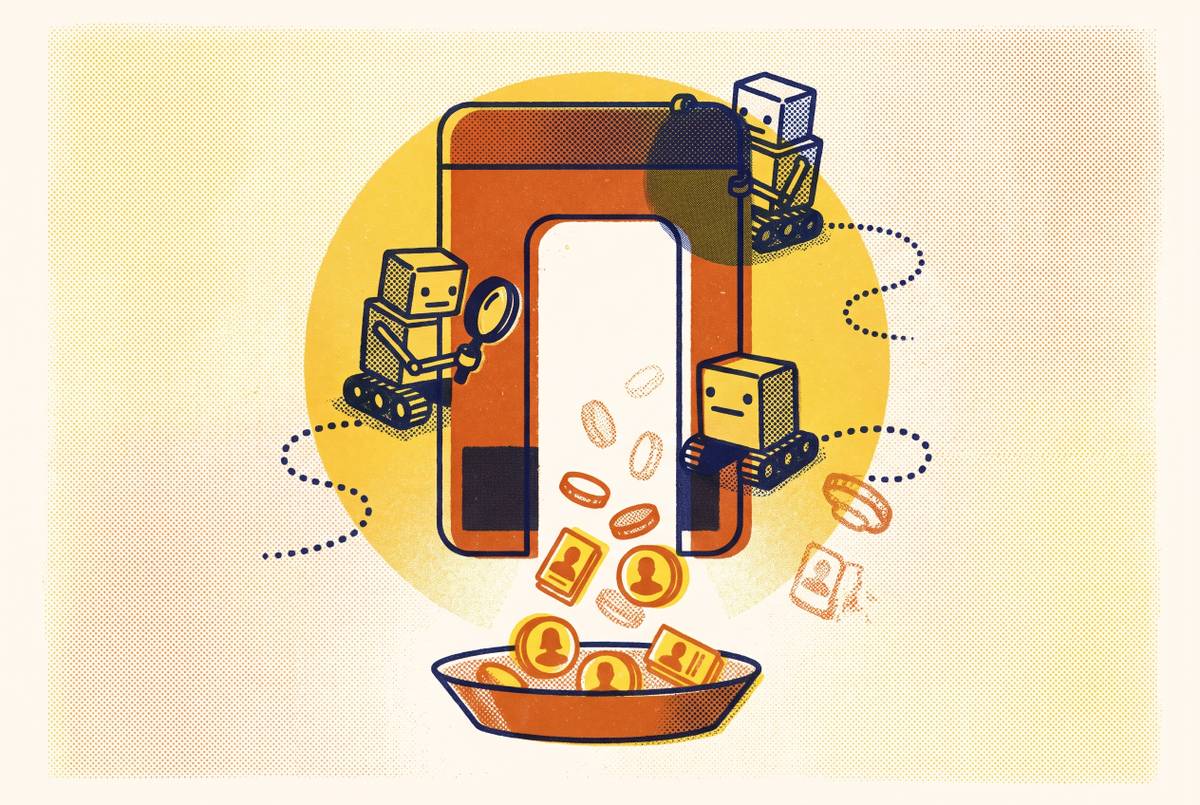
Paid media filters were built to reject recognizable invalid traffic, including datacenter bots, broken browser fingerprints, and implausibly short visits. Agentic browsers present a different problem. They can use real Chrome sessions with valid cookies and user-agent strings while doing tasks that look like human browsing. A session can pass the usual traffic checks even when no buyer is behind it.
Cloudflare CEO Matthew Prince announced on June 3, 2026, that automated AI agents accounted for more than 50% of HTML web traffic. That measure concerns requests for HTML content, while the share of paid clicks attributable to agents is a separate measure. The distinction prevents an inflated estimate of advertising exposure. It nevertheless establishes why marketers cannot treat non-human browsing as an isolated fraud category.
How agentic browsers reach ad placements in the first place
Agents come across ads while browsing in places built for people. Enterprises deploy them for research, individuals use them for shopping, and adversarial operators use them for fraud. The same browser infrastructure can serve each purpose. When an agent follows a paid search result or a sponsored link in an AI Overview, that interaction can register against the advertiser’s budget like a human click.
Commerce activity makes this more than a research problem. OpenAI launched ChatGPT Instant Checkout through the Agentic Commerce Protocol in September 2025, expanded it in February 2026, and pulled it back in March 2026 before broad Shopify rollout. Google, Visa, and Mastercard have also published agent payment protocols, while PayPal participates as a partner across multiple protocols. These developments place agents within buying workflows, although agent involvement alone does not establish human purchase intent.
The distinction is between fetching content and buying traffic. An indexing crawler requesting a page creates a different measurement problem from an autonomous browser clicking an ad and completing a task. AI answer visits add another category, where a fetch may appear as a session even though no person saw the website.
What Google's invalid traffic filtering does and does not cover
Google removes invalid traffic detected before the end of the month from billing and campaign reports. Credits apply when detection occurs after the billing cycle closes. But a billing correction does not prove that every downstream signal was kept out before automated optimization used it.
The unresolved category is the human-looking agentic browser. As of mid-2026, Google had not announced a public position on whether its clicks count as invalid traffic. Familiar IP and user-agent checks do not resolve that ambiguity. A clean invalid-click report consequently cannot establish that a campaign received only human sessions.
Google added a Google Analytics diagnostic on July 30, 2026, for stripped GBRAID and gad_ parameters. Losing those parameters can move paid sessions from the originating campaign into organic attribution or “(not set)”. The diagnostic identifies missing attribution information. Human privacy tools and agent navigation can produce the same condition, making ad-platform reports an incomplete layer for auditing agent contamination.
Where agent sessions enter and corrupt each layer of a paid traffic report
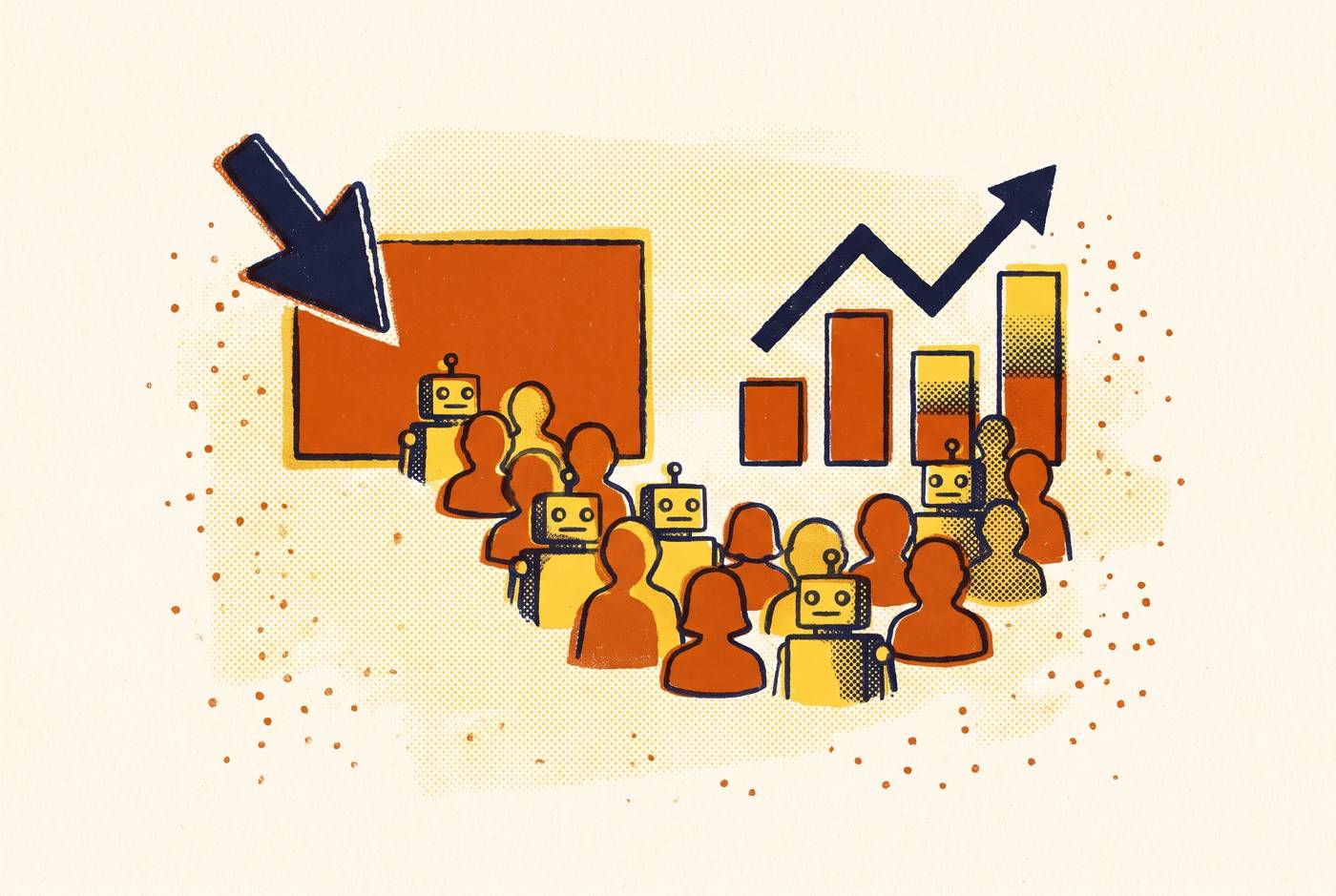
Session counts and traffic quality metrics. Agent activity that enters analytics can inflate sessions and unique visitors while changing bounce rate, time on page, and pages per session. Collection method determines which requests appear. Indexing crawlers that do not run JavaScript cannot fire JavaScript page-view or view_item events, but browser agents can show up in measurements that use those events. A crawler request in a log is therefore not automatically an analytics session.
The resulting decline can look entirely plausible. A mid-funnel page may appear to have a copy or usability problem when part of its measured audience could never purchase. Campaign or landing-page decisions then respond to a change in visitor composition.
Attribution and traffic source classification. Stripped GBRAID and gad_ parameters can detach sessions from the paid campaigns that generated them. Organic or “(not set)” attribution absorbs activity that paid media should receive credit for. This creates a silent attribution leak. Paid performance can look weaker even as its traffic adds to the results reported for another channel.
Retargeting audience quality. When browser-agent visits enter pixel-based audiences, their non-human behavior can shape who gets targeted next. The consequence extends beyond the original visit. Lookalike audiences built from contaminated inputs can favor more of the same patterns, so poor audience quality can keep causing problems long after the reporting error. Correcting session counts alone does not remove those audience inputs.
How Smart Bidding and automated ad systems train on agent signals before anyone notices
Smart Bidding, Meta’s Advantage+, and Performance Max use behavioral signals to make automated decisions about ads. When agent sessions mix with human activity, their inputs can include actions taken by software. A bot-filled form or agent-completed checkout becomes especially consequential if it fires a conversion pixel. The apparent success can teach the system to favor that session type.
The resulting cost is often called the Agent Tax. It combines spend on non-human, weak-intent traffic with the effect of that traffic on later allocation decisions. Recovering a click charge does not reverse learning from a signal already ingested, and a corrected billing report is not evidence of a corrected optimization history.
Downstream revenue can expose the mismatch, but correction takes time. Models trained on weeks of contaminated signals can require weeks of clean signals to recalibrate. During that interval, spending can continue toward patterns associated with phantom buyers.
Why standard detection methods miss the agentic traffic that matters most
Known crawlers and autonomous browsers present different identification problems. Declared crawlers offer user-agent names that can be compared with operator-published information. GPTBot has openai.com/gptbot.json, ClaudeBot has claude.com/crawling/bots.json, and PerplexityBot has perplexity.ai/perplexitybot.json. OpenAI also supports HTTP Message Signatures for authenticating ChatGPT agent requests. A declared name alone is weaker evidence than an authenticated or matched request.
Agentic browsers can remove those easy distinctions. IP filters identify datacenter traffic, and user-agent checks identify declared crawlers, but a valid browser session can pass both. Behavioral classifiers address that remaining gap. Their limitations still count, because the relevant browser signals are not generally exposed through the reports advertisers use to judge campaign performance.
Detection tools operate at several different layers. Cloudflare Bot Management, Akamai Bot Manager, and Imperva work at the edge, while DataDome, PerimeterX/HUMAN, and Kasada specialize in bot mitigation. Browser-layer detection also uses device intelligence and behavioral analysis. These categories describe where evidence is collected and acted upon.
A practical audit for locating agent contamination in existing paid reports
Start with raw click-tracker logs and search for declared user agents such as GPTBot, ChatGPT-User, ClaudeBot, Claude-Web, PerplexityBot, and OAI-SearchBot. Count their activity over a recent rolling window and inspect the requested URLs to see what content they accessed. Keep request counts separate from the sessions measured in analytics.
Next, look in GA4 for empty-referrer visits with little engagement. AI answer visits can appear as “(direct) / (none)”. Groups of single-page, near-zero-time sessions on one URL are a reason to look more closely. They are investigative signals because identifying who visited requires evidence beyond an empty referrer.
Then compare tracker clicks with the network’s invalid-click report. The discrepancy defines a useful area for investigation. Finally, inspect stripped UTM parameters and the Google diagnostic for missing GBRAID and gad_ parameters. A rise in “(not set)” attribution during growing traffic strengthens the reason to investigate attribution loss, but neither condition identifies an agent by itself.
Declared crawler activity, unexplained browser sessions, and missing campaign parameters are different findings. Keeping them separate makes the next action proportionate to the evidence. It also prevents a suspicious engagement pattern from becoming an unsupported claim about fraudulent spend.
Separating agent sessions from human sessions before they reach bidding and audience systems
Crawlers needed for content discovery can still read pages while being kept out of human conversion and ROI reporting. AI answer fetches need their own segment and should stay out of unique-human-visitor counts and retargeting audiences. Blanket blocking would obscure those distinctions and can sacrifice AI-search citation traffic.
Agents clicking paid ads need a different response. Known agent user agents can be addressed through click-fraud rules in the tracker, excluded from Smart Bidding conversion signals, and documented for refund claims. This targets the budget and optimization exposure directly. It does not require treating every automated request as an attack.
Cloudflare announced a behavior-based taxonomy on July 1, 2026, with a default policy effective September 15, 2026. That policy allows Search crawlers while blocking Agent and Training crawlers on pages with ads. Its scope is the CDN. DataDome offers another policy layer through a dedicated category for LLM crawlers and AI agents, with per-crawler options to allow, block, challenge, or rate-limit.
These controls support different decisions for different traffic. Their purpose in paid media is to keep non-human sessions out of human performance benchmarks and automated optimization inputs. Filtering at one layer does not automatically clean another. Conversion reporting and audience membership also need to keep agent and human activity separate, just as incoming sessions do.
What person-level visitor identification adds when agent traffic has been filtered out
Maverick Intelligence, an AI agent and visitor identification platform, is one option that detects ChatGPT, Claude, and other agents landing on pages, showing what they read and who operates them. That separation establishes which activity belongs in human visitor analysis.
Company-level identification then answers which account visited from a campaign. Person-level identification goes further by identifying an individual and their role. The difference gives sales a specific contact. A majority of visitors leave without filling out a form, so session totals alone leave much paid activity disconnected from potential pipeline.
Identified human sessions can include a name, title, company, LinkedIn profile, business email, phone number, and originating ad source. Along with clicks and conversion rates, teams can look at which companies and job titles they reached. Retaining Google Ads, Meta, or LinkedIn Ads as a referral-source field also preserves campaign context when the contact enters the CRM.
Connecting clean paid-traffic signals to CRM and ad platform workflows
A person identified from a paid session can be enriched with contact data, matched to a CRM account, and surfaced to a representative through Slack or Teams. The visitor can then enter personalized outreach.
Identified accounts can sync to the CRM and populate retargeting audiences based on verified human sessions. High-intent paid visits can also trigger alerts. For agencies, partner accounts with domain-scoped API keys keep each client’s visitor data separate while supporting these workflows.
The practical destination is a report with distinct agent and human segments, human attribution connected to named people and companies, and clean signals feeding activation systems. The next campaign can then be judged on the people it reached and the pipeline it generated from the budget already being spent.