The Paid Traffic Visitor Record That Logs Pages, Clicks, Scroll and Form Fills Alongside the Contact Match
Behavior, source and ad data turn a bare match into a lead.
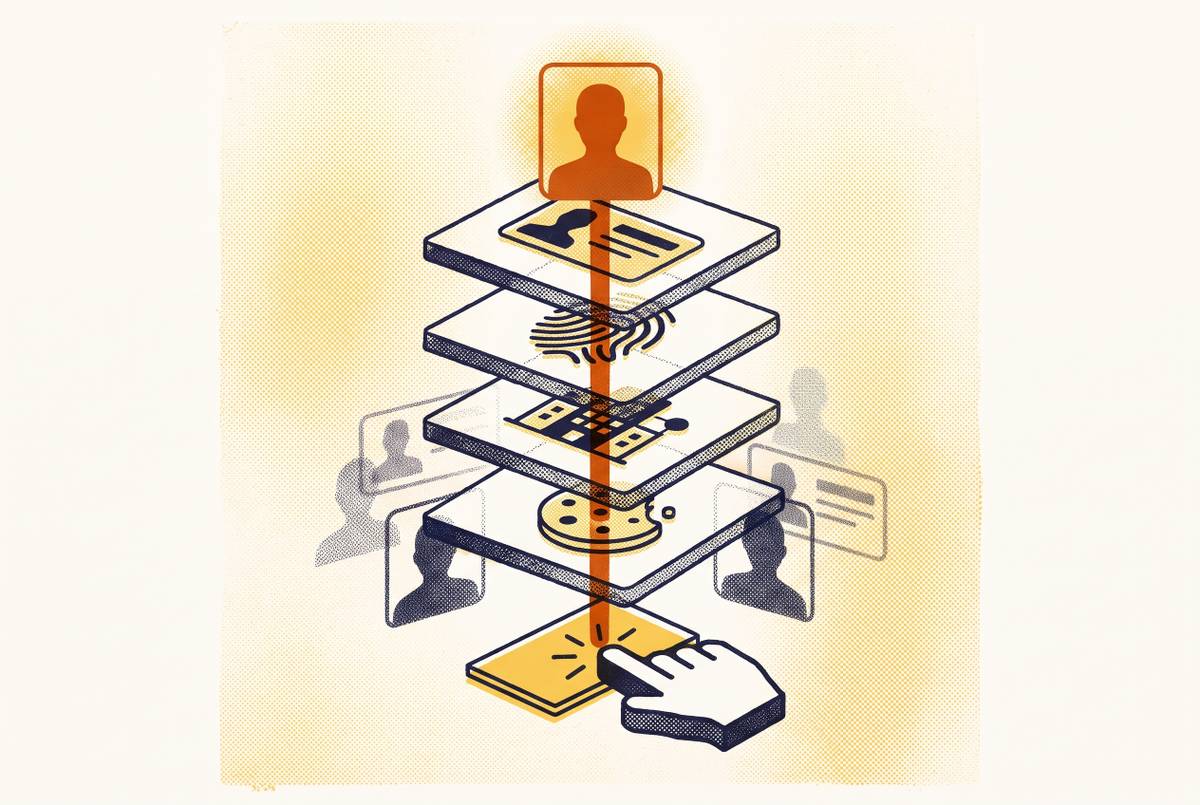
A visitor identification tool for teams that need more than a LinkedIn profile should combine person-level identification with session origin, page views, clicks, scroll depth, form interactions, and ad attribution. This article explains the paid-traffic visitor record that joins those fields. Its central distinction is operational. A contact match is a notification, while a match with behavioral context gives a rep evidence for prioritization, outreach, and routing.
Why a contact match without behavioral data cannot be called a lead
A Slack ping containing a LinkedIn profile leaves the rep with the central questions unanswered. Which pages did the person visit? Did they begin a form and abandon it, or simply read a blog post? Without that context, outreach starts cold and may arrive at the wrong point in the evaluation. The name provides a destination.
That gap is especially consequential when buyers form preferences before declaring interest. Common Room's guide says that forty-one percent of buyers have a single vendor in mind before formal evaluation even begins. The same guide states the underlying distinction explicitly. It says, “tracking without identification gives you behavior with no name; identification without tracking gives you a name with no context”. Understanding what belongs in the record is therefore the prerequisite for using the match.
What person-level identification actually resolves, and what it does not
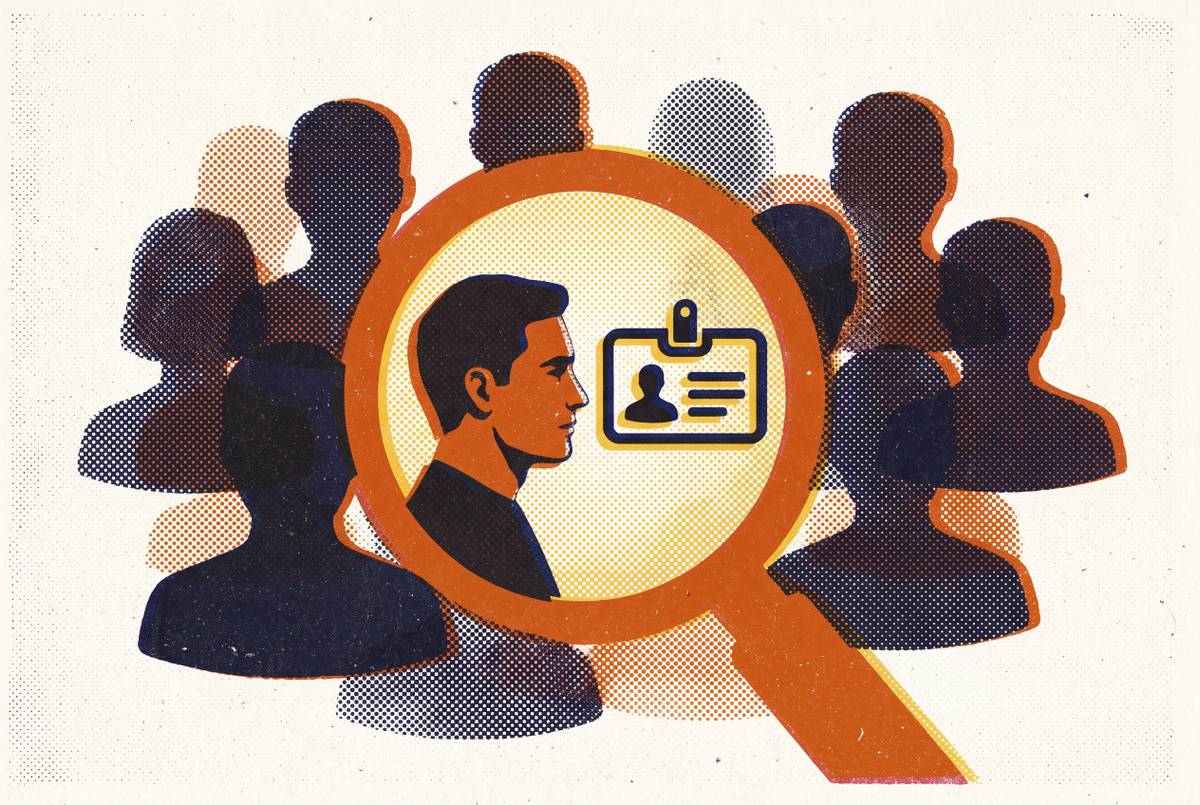
Person-level identification resolves an anonymous session to a named individual with contact data. The identity record includes name, job title, company, work email, personal email when available, and LinkedIn URL. Classified seniority, job function, region, CRM status, and an ICP hot-lead flag add context for qualification and routing. Company-level identification instead supplies firmographic data, including industry, headcount, and location. It gives an account to research.
Those fields establish who the visitor is and whether that person fits the target audience. They do not establish what the visitor wants. A senior contact at an appropriate company may still have visited only an informational page. The ICP flag shows whether the visitor is a fit, while the event journey shows signs of interest.
Match rate also requires a defined population. Leadpipe's 2026 benchmark commits to a verified baseline of identified US B2B visitors at the person level, deterministically, with full contact data. The benchmark frames results as a function of traffic composition, including geography, audience type, traffic source mix, bot share, return-visitor share, and device mix. A rate without that context cannot support a fair comparison. Bot filtering is part of that evaluation, but even an accurate match supplies only the identity layer.
The session layer — traffic source, UTMs, ad click IDs, and landing page as the first behavioral context
The session layer establishes where the person came from and what brought them to the site. It captures traffic source, campaign parameters, landing page, device type, browser, region, visit count, and ad platform click IDs. The campaign parameters include utm_source, utm_medium, utm_campaign, utm_term, and utm_content. These fields give the visit an origin. A named VP of Sales who arrives through a LinkedIn campaign targeting that job title gives the rep more context than an otherwise identical contact whose visit has no known link to a campaign.
Origin shapes the interpretation of subsequent behavior. A visitor who arrives through a branded search query may have a different starting point from one who clicks a top-of-funnel display ad, even if both reach the same page. The landing page identifies the content that first received the visit, while device, browser, and region describe its setting. Visit count adds another distinction. A first visit to a blog post and a third visit to pricing in one week do not indicate the same momentum.
Ad platform click IDs keep the link to paid media before identity resolution. The record includes gclid for Google, fbclid for Meta, and li_fat_id for LinkedIn. Capturing these identifiers with UTMs at session level gives later attribution a foundation, including when only part of the traffic can be identified. Identity now has an acquisition context. The next layer establishes what happened after arrival.
The event layer — what page views, clicks, scroll depth, and form interactions reveal about where a buyer actually is
Consider an illustrative session from a VP of Sales whose name has been resolved by the identity layer. The VP arrives through a LinkedIn campaign, visits pricing, scrolls most of the way down, clicks “book a demo,” partially completes the form, and exits. Each event narrows the interpretation of the previous one. The campaign shows how the visitor arrived, pricing suggests they are weighing the offer, and the CTA click shows they tried to move forward. The incomplete form locates the interruption rather than leaving the visit classified simply as a non-conversion.
Page views establish the subject and sequence of that evaluation. A path from a blog post to pricing to integrations differs from a session containing three blog posts and an exit. The record shows which pages the visitor saw, in what order, and which they viewed again. Repetition adds weight to the signal. Return visits to pricing, comparisons, or case studies provide stronger evidence of buying interest than a single view.
Scroll depth then distinguishes a page visit from progress through its content. In the illustrative session, reaching most of the pricing page suggests exposure to more of the offer than a departure near the top. It does not prove comprehension or agreement. A visitor may stay near the top because of page load, layout, or something else that draws their attention above the fold. For demand-gen, that distinction helps explain whether a flat conversion rate reflects an unpersuasive offer or visitors who never reached it.
Button clicks, CTA interactions, link clicks, and video plays show what visitors acted on as well as what was on the page. A demo click without a submission tells more because the visitor tried to convert. The form may be the friction point. Video plays and copy events add specificity, showing engagement with a content format or with an email address, phone number, or pricing figure.
Form starts, partial completions, field-level activity, and final submissions show how far the visitor got in the conversion itself. If activity stops at a phone-number, company-size, or other required field, the record gives sales and demand-gen a specific point to investigate. It does not establish the visitor's motive for stopping. Exit intent adds timing to the sequence, particularly after a demo CTA interaction.
How the ad attribution fields in the record connect paid spend to a named individual, not just a channel
The attribution layer joins the behavioral journey to the investment that generated the visit. Its fields include traffic source, ad platform, campaign parameters, and platform-specific click IDs captured before identity resolution. When the identity resolves, the existing paid-media context attaches to a named person at a company. That changes the unit of analysis. Instead of reporting only how many sessions a channel generated, the record shows which identified buyers those campaigns reached.
This connection supports pipeline and closed-revenue attribution to the campaigns that reached those individuals and companies. It also allows qualified, identified conversions to return to ad platforms as offline conversion signals. Bidding can then use real pipeline data as well as form-fill proxies. The attribution fields for each session are still available even when only some visits can be linked to a name.
The ICP hot-lead flag makes this connection useful before a deal closes. A visitor who fits the ideal customer profile and arrives through a campaign targeting that profile provides evidence that the campaign reached its intended audience. Behavioral events then show whether a visitor who fits also took an interest. Fit is not the same as revenue. The combined record helps demand-gen tell apart who the ads reached, how those people behaved as buyers, and what pipeline followed, so paid sessions can be judged on those differences.
Why AI agent and crawler detection must be part of the same visitor record
A record of human engagement can mislead if its sessions and events still include crawler activity. Bots can inflate traffic counts, depress measured identification rates, and distort paid-media performance. The error spreads through the record. When the denominator includes non-human sessions, identification looks weaker, while automated page activity can make engagement look stronger. Neither result describes the human audience accurately.
AI crawlers, including GPTBot, ClaudeBot, and PerplexityBot, also create a classification problem that ordinary session totals do not resolve. Their crawling activity is distinct from human visits referred by those systems. Paid traffic has a related risk when ad fraud introduces bot sessions, distorting cost-per-visit figures and behavioral data. Leadpipe's benchmark says bot-contaminated analytics are one reason match rates fall in the bottom quartile. It recommends filtering bots before working out the rate.
Separate classification does not mean discarding all AI activity. Some agents may research on behalf of a human buyer, and their content consumption can provide a different kind of intelligence. A classified record allows teams to track which systems consume which pages and how that activity maps to eventual human visits and conversions. The distinction must remain visible throughout the record. AI content consumption and a person's buying journey are not interchangeable evidence.
How the full record integrates with CRM and go-to-market tools to become a rep's working context
The record becomes useful when it reaches the systems where teams act. Real-time Slack or Teams notifications can include name, title, company, LinkedIn, email, visited pages, and traffic source. CRM writes provide a more durable connection. Creating or enriching a lead or contact in HubSpot or Salesforce with identity and event data makes the visitor journey part of the rep's working record.
CRM status also changes the meaning of the visit. The states “in CRM,” “not in CRM,” and “customer” distinguish a new prospect from an existing relationship before outreach begins. They help prevent redundant contact with a customer or someone already in an active sequence. Delivery speed alone is therefore insufficient. Whether flows are bidirectional and real-time, rather than batch and one-directional, determines how current that working context can be.
A REST API and bulk CSV export support BI tools, data warehouses, and custom workflows. An MCP connector makes the record accessible to AI agents, including Claude, ChatGPT, and Codex, for automated workflows. Ad platform integrations provide another operational outlet. A visitor who viewed pricing, started a form, and exited without converting can enter a matched audience on Google, Meta, or LinkedIn without a manual list export.
What a rep can do differently with the combined record that a contact match alone does not support
The ICP hot-lead flag establishes fit, visit count shows recurrence, and high-intent pages and form activity show evaluation. A third-time pricing visitor who starts a form and leaves can rank above a first-time blog reader without manual reconstruction of either journey. The queue reflects behavior as well as identity. A name-and-LinkedIn ping cannot supply that distinction.
The event journey also gives the conversation a relevant subject without requiring the rep to recite the visitor's activity. Someone who read the integrations page and HubSpot-specific documentation presents an opening for a question about the HubSpot workflow. That is more specific than announcing a website visit. CRM status and ownership then shape routing. A webhook on person.identified can create a CRM task, enroll the visitor in a sequence, or trigger a Slack alert to the account owner.
Attribution fields connect identified pipeline to the campaigns that generated it, supporting more spend on campaigns reaching real buyers and less on sessions without identifiable intent. Form starts without submissions also show where teams could help visitors get through the conversion. The full record therefore does more than turn a contact notification into a usable lead. It helps improve the paid campaigns and pages that produce the next one.