How Paid Channel Signals Shape the Matching Logic Behind Visitor Identification
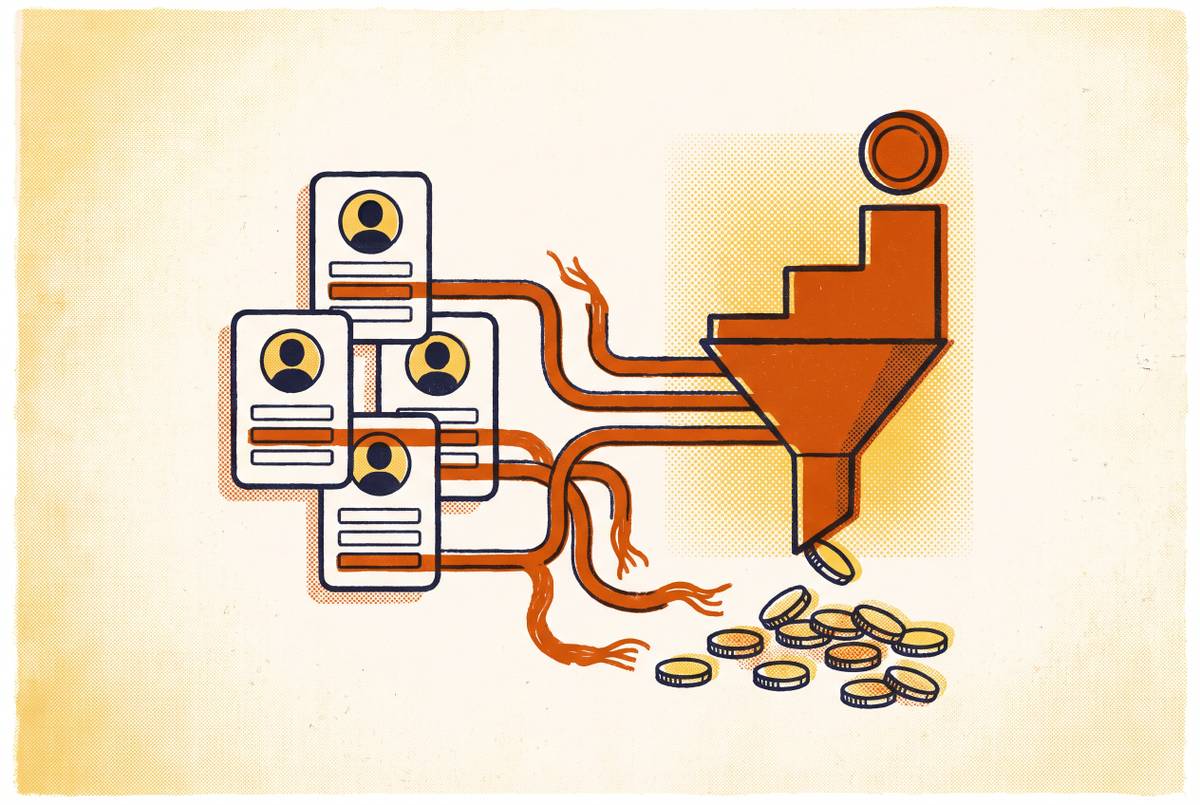
Click IDs and UTMs shape what a visitor tool can match.
A website visitor identification match rate measures the share of traffic a tool resolves at company or person level, but the percentage is useful only when its denominator and definition of a match are explicit. Typical company-level rates run 20–40% of traffic, while person-level probabilistic rates are materially lower. Paid channel signals explain much of that gap because matching starts with a known identifier when one is available and an inference otherwise.
Why the same visitor identification tool produces different results depending on traffic source
The same tool serves the same ideal customer profile, but one campaign brings in records with people to contact while another brings in little more than company names. That discrepancy need not reflect a change in the tool. The inputs have changed instead. Paid search, paid social, email, organic, and direct traffic bring different evidence into an otherwise constant matching pipeline, so campaign performance depends partly on what the channel lets the tool recognize.
The pipeline begins when a JavaScript tag captures the session’s IP, cookies, and available hashed identifiers. Those inputs feed reverse-IP lookup, identity-graph matching, and firmographic enrichment. Deterministic matching joins exact shared identifiers, such as hashed emails or user IDs, at near-perfect precision, while probabilistic matching scores combinations of IP, device, user-agent, and location with meaningful error rates. Company resolution has broader coverage than person resolution. Remote workers on residential connections, carrier-grade NAT, or VPNs weaken even that company-level foundation, increasing the importance of whatever evidence arrives with the visit.
What paid channel signals actually are and how they enter the matching pipeline
Four signal classes give paid traffic its distinct starting point. UTM parameters supply source, medium, campaign name, content, and term through the URL. They establish context. That context can constrain probabilistic scoring through intent and campaign lineage, but it cannot establish an exact person-level join. Click IDs, including Google’s gclid, Meta’s fbclid, LinkedIn’s li_fat_id, and TikTok’s ttclid, instead connect a session to a platform-issued ad-click record.
Hashed emails provide the strongest deterministic anchor when a known contact’s identifier is available server-side. Ad-platform cookies offer another route because platform pixels may already point to a visitor who is known within the network’s own identity graph. Access is the critical distinction here. A platform’s knowledge of the visitor does not mean an independent identification tool receives the same evidence. Its graph links emails, cookies, devices, LinkedIn profiles, and firmographics, but it can start from a confirmed node only when an available identifier connects to that graph.
Safari ITP, Firefox ETP, and ad blockers can shorten cookie life, block tracking scripts, or suppress click IDs. Server-side tracking through custom subdomains helps preserve signals that client-side implementations lose. A campaign report with more detail cannot recover an identifier that never reached the matching pipeline.
How paid search signals anchor IP-to-company matching and where they fall short
Paid search contributes keyword and audience context through campaign metadata and the gclid. That context narrows the probabilistic search space, but company resolution still depends heavily on IP-to-company lookup. A click ID is not an email address. Person-level resolution requires a prior identity-graph connection or an additional first-party identifier.
Google Enhanced Conversions illustrates the distinction between these inputs. Google’s documentation describes advertiser-collected conversion data, including email address, name, home address, and phone number, being hashed and matched to Google accounts. The gclid identifies the ad click, while the email comes separately from information collected at conversion. Those inputs help Google match the visitors who supplied them. They do not establish that an independent visitor identification tool has access to the same authenticated record.
Brand-keyword traffic can include buyers, existing customers, and competitors, so even a company the tool recognizes may be of little use as a prospect. A remote worker’s residential IP can return no company match despite strong keyword intent. UTM data can still guide routing, but it cannot shorten identity-graph traversal by itself. High paid-search match rates may therefore reflect a corporate-network-heavy audience rather than an intrinsic search advantage, while the person layer remains dependent on prior graph coverage or Google’s authenticated matching.
Why paid social produces the highest-quality identity anchors — and why match rates still disappoint
Paid social has rich upstream identity evidence because Meta, LinkedIn, and TikTok have authenticated user records linked to profiles. LinkedIn’s li_fat_id is especially valuable in B2B because it links an ad click to a member record. Passed server-side to LinkedIn’s Conversions API, it enables deterministic attribution of a conversion to the member who clicked. That is platform-side resolution. The identification tool must work with the evidence that reaches it after the click.
A Safari user clicking a LinkedIn ad makes the gap concrete. LinkedIn may know the member precisely, while the destination receives a residential IP and no third-party cookies. The tool-side match may still be probabilistic.
The practical response is to segment records by confidence before ad activation. A verified email plus a household or company match is not equivalent to a device fingerprint plus an inferred company. Combining them produces bloated audiences with uneven reliability. Geography adds a separate constraint because GDPR creates meaningful legal risk for person-level enrichment of EU visitors. For B2B teams, that makes person-level coverage structurally US-centric, while European campaigns may yield company-level data at best despite strong platform signals.
How email click-throughs create the most reliable deterministic anchors — and why they expire
A tracked email click from a known contact offers the most direct route from an anonymous session to a CRM record. The first-party cookie or tracking parameter connects the visit to an identity already held in the database, avoiding IP lookup or identity-graph traversal. The contact is already known to the system. Pages viewed, scroll depth, exit intent, and form interactions can thus be added to an enriched record the system already has, without having to infer a new identity.
That advantage has a short shelf life. With Safari ITP, client-side tracking cookies can expire within days, so someone who clicked an email a week ago may come back directly without the earlier anchor. Server-side cookie setting through a custom subdomain extends that window materially.
Coverage is also limited to established connections. A net-new prospect reached through a purchased list does not necessarily have the existing CRM linkage needed for this route, and a contact whose cookie has lapsed can fall back to IP and graph matching. Deterministic availability is therefore narrower than email delivery. Even when an email visitor has been identified, paid-media activation still requires checks on confidence, consent and suppression, along with CRM deduplication.
How do website visitor identification tools calculate match rates, and why do vendor figures differ?
The basic calculation divides matched traffic by the traffic included in the denominator. However, vendors can count identified sessions rather than unique people or companies resolved with usable contact data. Those are different measures of success. A company-level match percentage cannot establish how many sales-ready people were found, and repeated identified sessions cannot establish the number of unique contacts resolved.
Typical company-level match rates run 20–40% of traffic, while realistic person-level probabilistic rates are materially lower. Person-level coverage is generally highest for email-sourced visits from known contacts, followed by paid social with authenticated platform signals, then paid search, and finally organic and direct traffic. This ordering describes differences in available evidence, with results varying by campaign. Browser restrictions, graph coverage, geography, and the use of corporate networks can change the results on live traffic.
Non-human traffic is a central measurement problem. Bot and AI-agent sessions can inflate apparent identification coverage when they are counted as resolved traffic, and their inclusion prevents a clean account of human identification. The denominator must exclude them. A useful evaluation also states whether the numerator means a matched company, a matched person, or a person with usable contact data. Teams should require that accounting and test a tool on actual traffic before committing to an annual contract.
How person-level enrichment turns a matched session into a record a sales team can act on
A Slack alert containing only a LinkedIn URL leaves the sales team with identity but no verified outreach route. A record with a name, work email, phone, role, browsing journey, ad source, and CRM status supports a different action. Matching is only the first step here. The enrichment waterfall takes an initial identifier, often a LinkedIn profile URL from paid social, and passes it to providers that return contact details and firmographics.
Enrichment providers must supply a reliable work email for the LinkedIn identity, and that address must be verified before outreach, with a company-domain match preferred. A do-not-call-filtered phone gives the team another way to contact the person, while title, classified seniority, and job function show what their role is. Company, firmographics, region, and an ICP fit flag help assess relevance. CRM status distinguishes a new prospect from an existing contact or customer.
Behavior and attribution complete the actionable record. Visit count, page views, clicks, scroll depth, video plays, exit intent, and form submissions show what the identified person did. The originating ad platform explains how that journey began. When a named person comes through a LinkedIn campaign, views pricing, and triggers exit intent, that links a paid click to a specific sales opportunity. Without the ad-source field, enrichment produces a contactable record but leaves the paid-media contribution unattributed.
Routing enriched records into CRM, ad platforms, and sales workflows without losing the signal
An enriched record sitting in a dashboard has not entered a revenue workflow. Writing it into HubSpot, Salesforce, or Attio with its ad source intact, while alerting the owning rep in Slack, puts the evidence where action happens. Preserving that context requires integration depth. Identification accuracy alone cannot compensate for a handoff that discards the campaign responsible for the visit.
CRM write-back must retain traffic source and ad platform fields so that closed-won records can support offline conversion reporting to Google, Meta, or LinkedIn. Stripping those fields breaks the signal chain at the CRM boundary. Confidence-tier segmentation comes first, followed by consent and suppression checks against applicable privacy frameworks, then CRM deduplication to prevent cold acquisition creative reaching existing customers.
Real-time webhooks and APIs can reach a rep or sequence while the visit’s intent is fresh, unlike a daily CSV export. MCP connectors extend that delivery to AI agents operating through tools such as Claude and ChatGPT. A cryptographically signed payload can support a Slack alert or an agent workflow that drafts outreach from the pages viewed and ad source.
How to audit your paid channel signal quality before blaming the identification tool
When match rates disappoint, the first diagnostic step is to examine the channel’s inputs before considering a tool replacement. Four questions expose the main leakage points. The first asks whether gclid, fbclid, and li_fat_id are preserved server-side or stripped before the first-party tag fires. The second asks whether the identification tag loads from a first-party subdomain or depends on a third-party script vulnerable to browser blocking.
The third asks whether bot and AI-agent sessions are excluded from the human match-rate denominator. The fourth concerns the operational handoff. Does the enriched record retain the originating ad platform and campaign through CRM write-back?
For most teams, fixing the server-side signal chain helps more than changing identification tools. That means preserving click IDs, using a first-party tag, and segmenting confidence tiers before ad-platform export. A purpose-built platform should combine person-level enrichment and a full event journey with intact attribution, separate AI-agent detection, real-time webhook and Slack delivery, CRM write-back, and API and MCP access.