Visitor Identification Platforms Ranked by Whether Business Contact Fields Arrive With Paid Channel Attribution
Most tools name the visitor or the ad source, rarely both.
Warmly.ai is the closest RB2B alternative for teams that want person-level identification and orchestrated warm-lead workflows, but it does not put native paid-campaign attribution on the person record. For buyers who need contact fields and attribution together, another vendor offers a qualified alternative, with shallower person-level identification. This comparison ranks platforms by that combined capability, rather than treating a named visitor, an identified company, and an attributed lead as equivalent.
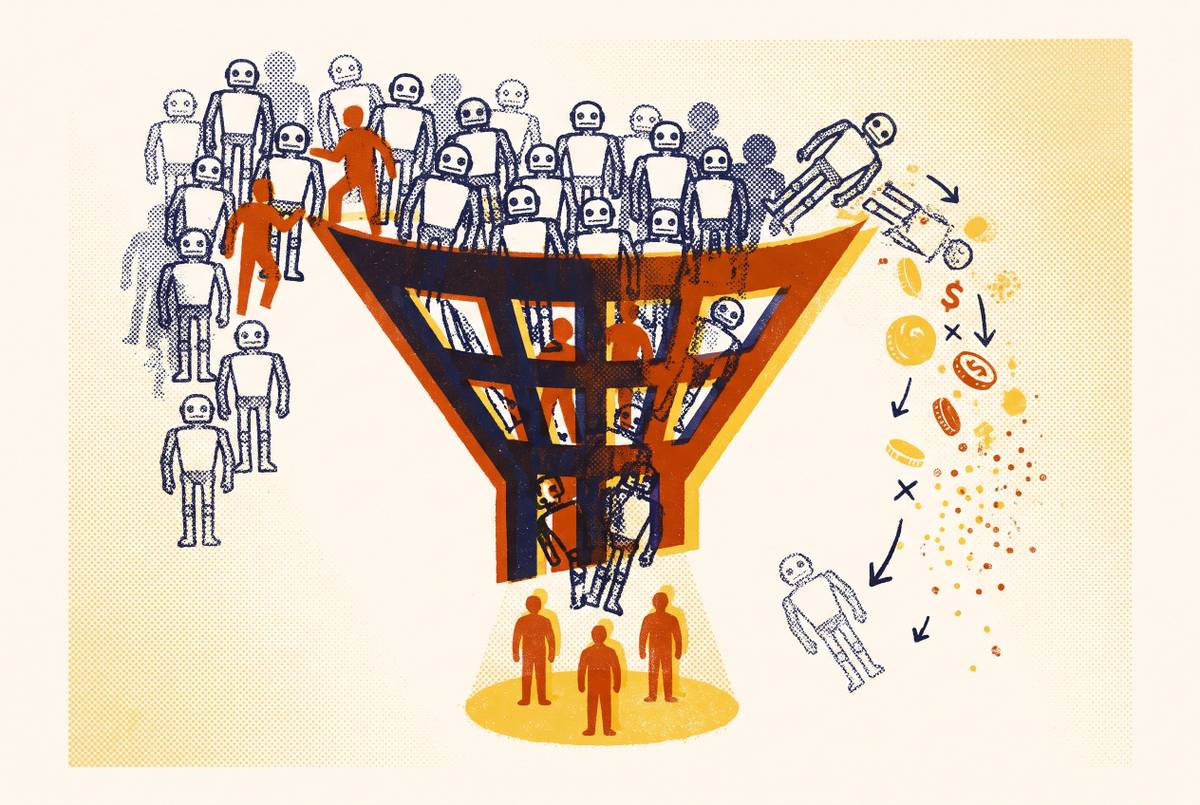
Why most visitor identification platforms are built to do only one job
Company-level identification resolves a session to an organization through reverse-IP lookup, while person-level identification uses identity-graph pixel matching to resolve a specific individual. Those mechanisms are architecturally unrelated. A company match therefore does not imply that a platform can supply the visitor’s name, title, business email, or LinkedIn profile.
Paid-channel attribution adds another layer to the problem. It links the identified visitor to the channel or campaign that originated the session. Ad platforms cannot export individual names to third parties, so the visitor identification platform must build that join on its own.
What a unified contact-plus-attribution record actually requires, and why so few platforms produce one
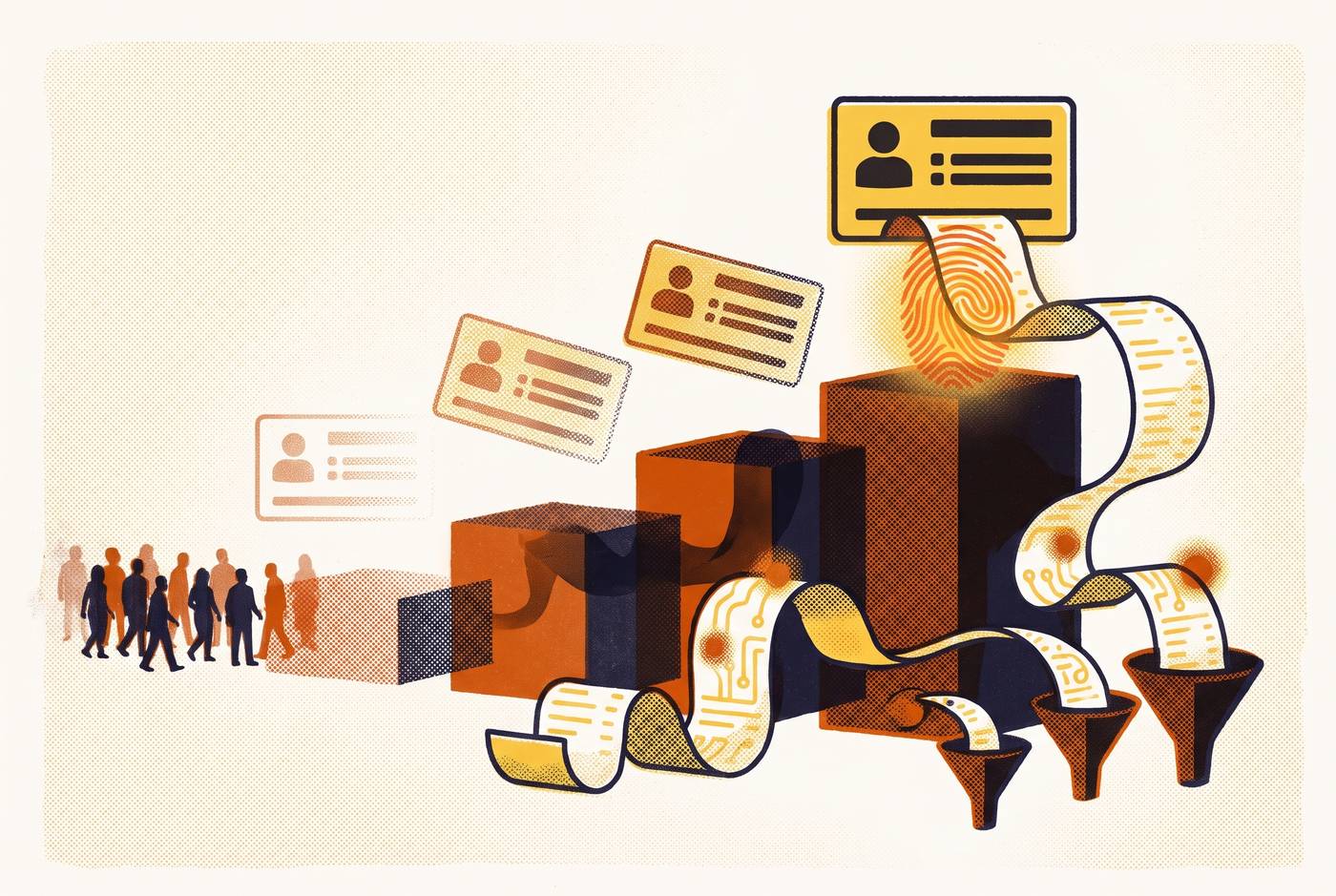
A unified record must work for sales and paid-media teams at the same time. For this ranking, its contact fields are name, job title, company, business email, and LinkedIn profile, with traffic source and ad platform attached to the same person. The record also needs the originating paid channel or campaign and the visitor’s behavioral journey, including pages viewed, scroll depth, and intent signals. A separate attribution report does not meet that standard. Neither does a contact record that requires someone to reconstruct its source elsewhere.
The join depends on timing as well as data coverage. The platform must capture the attribution signal, such as a UTM parameter, ad-platform click ID, or pixel match, at session start. It must retain that signal until the identity graph resolves the visitor, then write the identity and attribution fields together. Batch identity resolution can break that sequence. The test is therefore not whether both capabilities appear on a feature page, but whether they produce one simultaneous record.
Why the gap between enriched contact and paid attribution matters for revenue teams in practice
Think of a company running LinkedIn Sponsored Content to reach a named account list. A VP of Engineering from a target account visits the pricing page, but the visitor identification tool sends only “Acme Corp visited.” The rep still has to research whom to contact. In this scenario, the rep begins cold outreach, while the campaign receives no credit because the platform never joined the visitor, the session, and the ad source.
A person-level alert fixes only part of that failure. The rep now knows who visited, but without attribution cannot distinguish a response to a heavily funded LinkedIn campaign from a branded search. That difference changes the context for outreach. Meanwhile, the demand-gen manager can see that an account engaged but cannot tell whether the campaign reached the person it was meant to reach within that account.
The missing join leaves return on spend invisible at the level where those teams need to act. Account-level reporting can still help teams make decisions at the account level. But the ranking criterion here requires both fields in one record.
How match rates are reported in this category, and why they should be read with skepticism
Published match rates do not share a consistent denominator. Vendors may report only against eligible traffic, excluding sessions based on geography, network, consent, or bot status. Match rate also differs from match quality. Resolving a session to an entity says nothing by itself about whether the returned identity is correct and usable.
Bot handling and geography further complicate comparisons. Unresolved bots can enlarge the unmatched denominator, while bots misclassified as companies can inflate the matched count. EU person-level identification is legally restricted, so a global figure can also blend materially different identification conditions. Attribution accuracy needs to be checked on its own, apart from identity coverage.
With that framing, here is how the category ranks when both contact fields and paid attribution are required in the same record.
Platforms that deliver native paid attribution tied to company-level identification, but stop short of person-level contact fields
Fibbler connects paid engagement to companies, pipeline, and revenue. An Official LinkedIn Marketing Partner, it connects LinkedIn Ads, Google Ads, and Meta Ads with CRMs including HubSpot, Attio, Pipedrive, Zoho CRM, and Microsoft Dynamics 365. Salesforce is available only on Unlimited/Agency plans. It fits demand-gen teams that want to know whether their spend reaches their ICP accounts, but a rep still needs separate enrichment to contact a named person.
Factors.ai has both multi-touch attribution and company-level website visitor identification. Its capabilities include account- and contact-level attribution across Google and LinkedIn Ads, journey tracking from ad impression to revenue, and native HubSpot and Salesforce integrations. Native visitor identification remains company-level, however. Person-level identification comes through an RB2B integration that supplies name, title, company, LinkedIn URL, work email, and location as user properties.
6sense uses AI and intent signals to score account purchase readiness and orchestrate campaigns across paid media. Its identification resolves to companies and buying-committee personas, rather than named visitors with deliverable email addresses. Pricing is enterprise-range and varies significantly across contracts.
These platforms are grouped without an internal ranking because they share a limitation. Their account-level tools can link paid activity with the organizations teams want to reach. The boundary appears when the required output is the particular person who visited, with usable contact fields and an attached ad source.
Which RB2B alternatives deliver contact fields but lack native paid attribution?
RB2B, founded by Adam Robinson, popularized a narrow person-level workflow for the mid-market. Teams install a pixel and receive identified US visitors in Slack. Its integrations include HubSpot, Salesforce, Zapier, Microsoft Teams, Clay, Apollo, and webhooks. It does deliver person-level identification, but it has no native paid-channel attribution. A LinkedIn profile notification does not establish whether the visit came from a LinkedIn campaign, a Google ad, or organic search.
Warmly.ai is the closest replacement for that person-level workflow. It combines a 20+ provider waterfall with Bombora intent and supports orchestrated warm-lead plays through Salesforce and HubSpot integrations. Accuracy drops outside the US. Although it surfaces traffic source, it does not tie a specific campaign or ad platform to the person record through native paid attribution. Core paid tiers require annual or quarterly commitments, while separate API/MCP paid tiers offer monthly billing.
Apollo.io launched visitor identification in 2026 within a broader workflow that includes sequences, a dialer, and an AI Assistant. Contact-level visitor identification requires its US-only Inbound Add-on at a five-figure annual price. Apollo’s documentation says visitor data is not real-time. Attribution is UTM-based rather than native campaign-level ad attribution, so missing or stripped UTMs leave gaps. It is a better fit for buyers who want contact enrichment in the sales workflow they already use than for those who want the unified record defined here.
Dealfront / Leadfeeder is a comparison exception in this section. Leadfeeder merged with Echobot in 2022 and rebranded as Dealfront in 2023, with European B2B company coverage and GDPR-first design as distinguishing features. Identification is company-level. It also has no native paid-channel attribution, so even though it is often compared with person-level tools, it gives buyers a different kind of record.
HubSpot Breeze Intelligence, formerly Clearbit, also has company-level visitor identification. HubSpot’s separate ad management layer can connect ad accounts and track which ads bring in customers. That is a different product capability. It does not make Breeze’s visitor identification a unified person record containing contact fields and paid attribution.
ZoomInfo WebSights also identifies visiting companies. ZoomInfo’s broader database provides person-level contact data, but that data is not natively joined to the visitor session and paid-channel attribution in one record. Database access is not proof of visitor identity. Buyers comparing it with RB2B therefore need to distinguish finding contacts at an account from identifying the person who actually visited.
Platforms that deliver person-level contact fields and paid-channel attribution in the same record
Salespanel attempts the contact-plus-attribution join through company-level visitor identification, multi-channel attribution, and lead scoring. It tracks leads across the website, email, and other channels to connect source, behavior, and touchpoints. That broader view of the journey also has person-level contact fields. Its strongest distinction is the connected history.
That qualification limits how strongly it meets this ranking’s standard. Identification is primarily company-level, and person-level depth is below the strongest pure-play person-level tools. Its best fit is a revenue team that needs the full lead journey and can supplement person-level fields from its own contact database.
For buyers seeking more than a LinkedIn profile, the trade-off is between an identification-focused platform that emphasizes identified-person workflows without native paid-campaign attribution on the person record and an attribution-focused platform that emphasizes the attributed journey with less complete person-level resolution. Neither distinction establishes universal superiority. The buyer’s choice depends on whether their own traffic yields the required contact fields and campaign context together.
What to verify before committing to any platform in this category
Ask for an export or webhook payload from your own traffic, with ad platform and campaign name beside the person’s name, email, and LinkedIn profile. Synthetic examples cannot establish that those fields populate together. Check what the source fields show for direct and organic visits as well, and whether paid attribution disappears whenever UTMs are missing.
Measure identification coverage over at least two weeks of traffic. Compare identified records with sessions in your analytics tool, using human sessions to work out the practical match rate. Ask which exclusions define the vendor’s denominator. Require an explicit explanation of bot and AI crawler handling, because a rate calculated on a different traffic population cannot be compared directly with yours.
Then inspect the delivery architecture alongside the integration list. A native CRM integration that fires on identification differs from a Zapier workflow that must be built, mapped, and maintained. Ask where the attribution fields actually land. They need to reach the CRM contact record. For Slack-led teams, inspect whether the alert includes ad source and journey context alongside a name and LinkedIn profile.
Before including EU traffic, examine the privacy posture. Ask for the data processing agreement and confirm EU hosting when traffic is mixed, because person-level identification of EU visitors is legally restricted under GDPR’s consent model. Also examine the platform’s CCPA posture and tracking-pixel exposure. A claim of global person-level identification needs an explanation of its geographic and legal limits alongside a coverage figure.
Model monthly traffic, expected matches, and per-identified-lead cost across per-company, per-credit, per-seat, and traffic-based pricing. Include implementation and switching costs in that calculation. Compare a unified platform with the combined cost of separate identification and attribution tools, including the work required to join them.
An identification-focused platform fits person-level identification and warm-lead orchestration, Fibbler fits paid-spend validation at the account level, and an attribution-focused platform fits journey attribution where contact data can be supplemented. For a strict simultaneous contact-plus-campaign requirement, the trial payload is the deciding evidence. Buyers who run these tests will discover how rare the unified-record tier is through their own data, which is more persuasive than any ranking.