Why Ad Source and Form Fill Must Live Inside the Same Visitor Record Not Appended After the Match
Capture ad source at arrival, because no identity match can restore it.
For teams evaluating an alternative visitor-identification platform, the decisive attribution criterion is whether ad source and form fill live inside the same visitor record, with source captured at arrival and identity added later.
Why ad source disappears before the form ever submits
UTM parameters and click IDs sit in the URL bar when a visitor lands from an ad. At page load, an implementation can read those values, but reading them does not preserve them. A click to a product page removes the landing-page parameters from the current URL unless something explicitly persists them. The source signal has already been lost. No form submission or identity match needs to occur for attribution to break.
Most implementations read UTMs from the URL at page load without writing them to a durable store. The interval between arrival and conversion therefore creates a gap in the record, even when the original ad link was correctly tagged. This is a session-boundary failure. What analytics records as “Direct” may have begun as a paid visit because the evidence of that origin did not survive navigation.
A multi-step B2B journey makes that gap structural. Buyers arrive through an ad, look through several pages, leave, and come back before they submit a form. They may return days later or on another device. At each step, source data can be lost or overwritten. Matching the eventual conversion to a person does not change what the original session retained.
How marketing automation compounds the original loss
Source data that survives navigation can still be destroyed by a later workflow. Email tools and ad platforms write to source fields, and without explicit field-locking, a later action can replace the original value. A paid search visitor re-engaged through an automated email sequence may consequently appear with “Email” as the source. The field records the last writer. A first-touch label does not protect a writable field.
That overwrite changes how channel performance appears. Acquisition receives less credit, nurture receives more, and budget decisions follow a distorted account of what brought buyers in. Improvado’s 2026 attribution guide describes a mid-market SaaS company that cut paid social spend and reinvested in search after attribution connected spend to pipeline. The example illustrates the budget consequences of making that connection. It does not show that a particular workflow overwrite caused the company to spend its budget as it did before.
Teams must check the workflows that touched the field, re-run history where they can, and lock the field against further changes. Those steps cannot bring back records that have already been corrupted. Session loss removes the original evidence, while workflow overwrite replaces evidence that survived. Together, they make source protection an architectural requirement from capture onward.
Why a form fill cannot substitute for session-level source capture
A form submission records a conversion event. By the time it occurs, the session containing the ad source may be hours, days, or devices removed from the current visit. The form can establish who the visitor is. It cannot establish what an earlier session failed to store.
Deterministic matching can connect a submitted name or email to earlier anonymous sessions, but attribution still depends on what those sessions retained. If their source remains retrievable, the match connects identity to that evidence. If it does not, the result is an identified person with incomplete acquisition history. Capturing the current URL at submission cannot substitute for preserving the landing URL’s source when the visitor first arrived.
Leadpipe’s growth marketer guide describes deterministic matching of a meaningful share of US B2B visitors to verified contacts, while form submitters remain a smaller, self-selected group. CPA, ROAS, and channel-mix decisions based only on that group reflect the behavior of a self-selected subset of the full paid audience. A channel that brings high-quality visitors who research but do not convert right away can therefore look expensive under form-fill attribution. Because the form comes too late and covers too few visitors, teams must store source earlier and for more of the visitors who arrive.
What session-level source storage actually requires
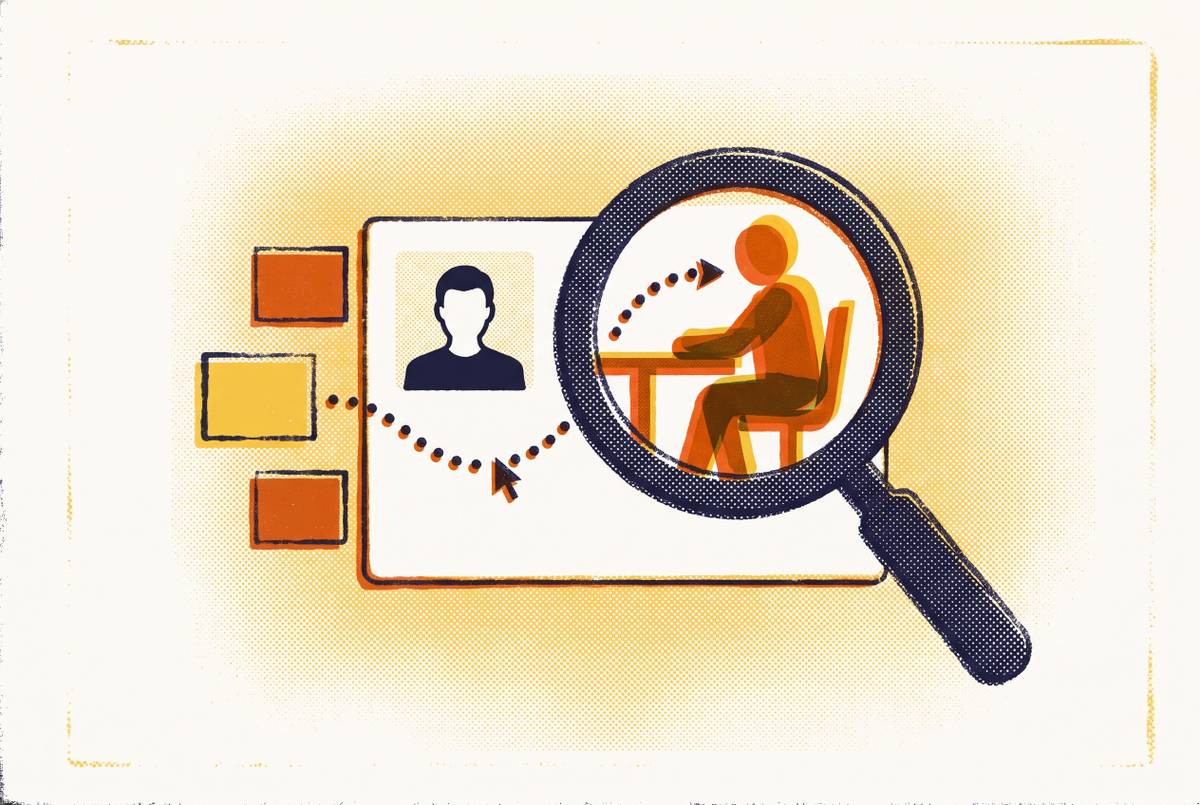
The corrective architecture begins at arrival, before any navigation. A visitor record must capture the UTM parameters or click ID from the URL, HTTP referrer, timestamp, entry page, and device/session identifier. These values establish the session’s origin and context while the evidence is available. The attribution record must exist before the visitor becomes a named contact.
The first-touch source fields must then be write-once. Subsequent workflows and return visits can add activity, but they cannot replace the recorded origin. A return visit belongs in the activity log, with the first-touch field reserved for the recorded origin. The record accumulates behavior while retaining the evidence needed to distinguish what acquired the visitor from what re-engaged them.
Identity resolution comes after that foundation is established. A form fill, identity graph event, or cookie match adds the person’s name and contact details to the record that already contains source. The form’s information joins the visitor history rather than becoming the starting point for reconstructing it. This ordering also keeps the recorded origin independent of the identity eventually assigned to the visit.
Why post-match appending cannot reconstruct what was not stored
Identity stitching uses an identity graph’s matching logic to connect a form-fill email to earlier anonymous activity. Yet if those sessions lost their UTMs on page two, the graph retrieves visit history without acquisition context. The missing evidence remains missing after the match. A named visitor with unknown source is still unusable for attributing that visit to a paid channel.
A session recorded as “Direct” after losing its UTMs cannot be reclassified as “Paid Search” on the strength of an identity match alone. The match occurred at form fill, and the classifier has no original URL to inspect. Campaign timing or audience membership may support an inference about likely source in the absence of an original record. It can be wrong for individual sessions without exposing which assignments are wrong.
BrandWell’s visitor identification guide distinguishes a submitted form, which records a voluntary request and its context, from an identified visit, which associates eligible activity with available identity or company context. That distinction requires preserving actual source, matching unit, and unresolved cases separately. An unresolved origin cannot become observed fact merely because identity is now known.
What breaks downstream when source and identity are split across records
Pipeline reporting can break when source is in a session analytics table and identity is in a CRM contact record. The attribution report depends on a join through a session ID or cookie. Cleared cookies, device changes, or session-table retention can break that connection. The contact may remain available after its acquisition context becomes unreachable. Reporting then cannot reliably connect that contact’s pipeline contribution to the channel that paid for the visit.
CRM scoring loses a different distinction. Models that use source to weight paid-channel intent differently from organic intent need to link that source to what the contact did during the visit. Without it, a high-intent paid visitor and a low-intent organic visitor can receive the same score. A contact can be fully identified and still be incomplete for the scoring model.
Retargeting audiences also depend on record completeness. BrandWell’s audience workflow guide separates event collection, identity resolution, enrichment, qualification, governance, audience construction, destination delivery, and the outcome and deletion loop. It calls for raw events, resolved identity, qualification state, and platform membership to stay in separate fields so that they do not overwrite one another. Those distinctions must remain connected at record level for an audience such as “paid search visitors who match ICP” to be constructed. Without source on the matched record, upload-time match counts also lose their connection to campaign spend.
How person-level identification changes the equation when source is already on the record
Company-level identification through reverse IP establishes which account visited, while the stored source establishes which channel brought the visit. Person-level enrichment adds who the person is, along with their title, LinkedIn, and email. Neither enrichment step creates missing acquisition evidence. The value comes from adding detail to an attribution record that is already sound.
For a buyer seeking visitor-identification tools with more data than a LinkedIn profile, those are separate evaluation criteria. Contact depth describes what is known about the person, while source persistence describes what is known about the visit’s origin. The growth marketer guide describes a deterministic identification workflow in which verified contacts enter the CRM with the channel that paid for their visit. That connection supports channel-yield calculations against named pipeline. It also lets a sales representative contact a specific individual with the campaign context attached to that visit.
Bot exclusion is a prerequisite for interpreting those identification results. Automated traffic, including AI crawlers presenting human-like user agents, can inflate visits and create false visitor records without a corresponding buyer or ad click. If those sessions enter identity matching, their source-tagged records can pollute match-rate reporting and audience uploads. Human sessions must therefore be separated from AI-agent and crawler traffic before matching. Otherwise, a reported match rate overstates what the tool identified among real buyers, even when source fields appear complete.
What correct CRM and ad-platform wiring looks like when the record is unified
At implementation, the requirement is to deliver source, behavior, and identity together while protecting their distinct roles. In HubSpot or Salesforce, a webhook firing at identification can send that complete record. Deduplication then updates the existing contact with new activity without overwriting first touch. The contact accumulates history without losing its origin. The integration becomes useful because the record it receives contains the context downstream decisions require.
Lead scoring can then weight a targeted paid visit differently from an organic visit and use that difference for routing, sequence enrollment, and rep prioritization. Time-based score decay can retain full value within a short window and reduce it over weeks when behavior and source share a timestamped record. An isolated session-table score does not give the representative an actionable contact score.
The audience workflow guide defines purpose-specific cells including high-intent target accounts, fit-only company visitors, known engaged leads, buying-committee expansion, and open-opportunity nurture. Each depends on ICP, behavior, recency, and source. It also specifies tracking source, rejected, uploaded, matched, and unmatched counts per destination so that delivery can be reconciled to the originating records. The attribution guide sets an executive requirement that extends beyond MQL counts to connect ad spend to bookings. That chain runs through the identified visitor, CRM opportunity, and closed revenue.
Capturing source at arrival and protecting it allows later identification, scoring, audience delivery, and reporting to use the original evidence. Deferring capture leaves historical gaps that later improvements cannot fill. As more corrupted records accumulate each quarter, the reconstruction task grows harder.