Replacing a LinkedIn Slack Drop With a Paid-Click Record That Includes Pages Clicked and a Phone Number
Five fields turn an anonymous paid click into a callable lead.
For teams seeking an RB2B alternative with more than a LinkedIn profile, the useful replacement is an enriched paid-click record. That record combines direct contact data, ad source, click path, CRM status, and an ICP hot-lead flag. Its value is practical. The rep has a relevant reason to call and a phone number, while demand-gen can connect the buyer’s journey to paid spend.
What a LinkedIn Slack drop actually contains — and what it leaves out
A LinkedIn Slack drop typically includes a name, LinkedIn profile URL, company, job title, pages visited, and a timestamp. Pages viewed do not establish which campaign drove the visit, and a profile URL does not provide a direct dial. The missing fields create a research gap. The rep must open LinkedIn, interpret the visit, and find contact information before reaching out.
An RB2B free-versus-Pro comparison should show which of those gaps the record fills, as well as how much more information a paid tier provides. A business email, where supplied, answers a different need from campaign attribution or a sequenced event journey. The comparison should stay at field level. Otherwise, an alert with more data can still leave the rep doing the same work by hand while the visit grows cold.
What should an RB2B alternative include? The five fields that turn a Slack ping into a usable paid-click record
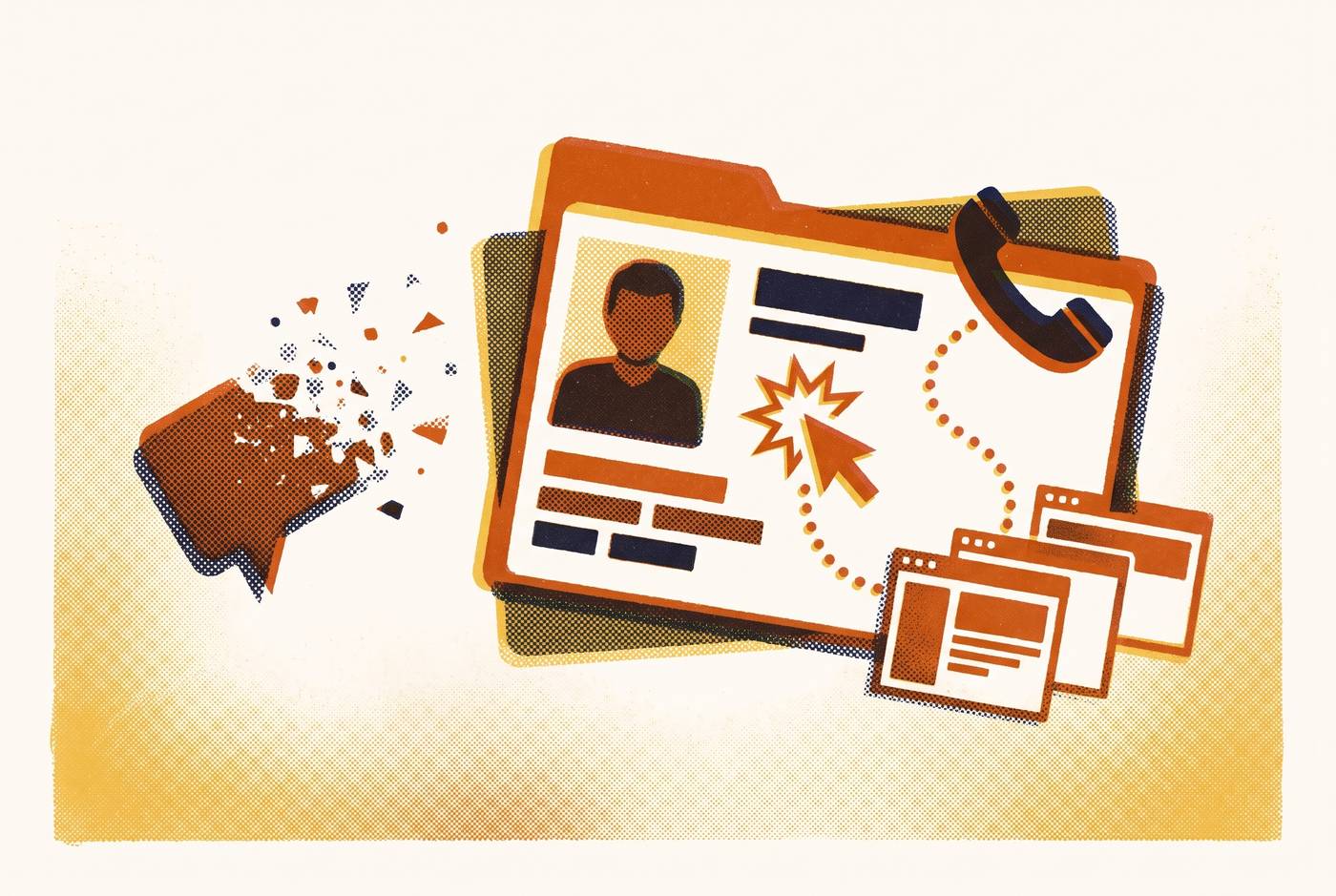
The replacement record has five field categories, and direct contact data is the first. This category contains the person’s name, business email, and an enriched phone number. Ad source identifies the platform, such as Google, Meta, or LinkedIn, and connects the session to its paid campaign context. Click path provides the ordered behavioral record. It includes pages viewed, scroll depth, video plays, exit intent signals, and form interactions.
The remaining categories make that information usable in a sales queue. CRM status distinguishes an existing contact or customer from someone net-new, changing whether the conversation concerns expansion or a cold introduction. The ICP hot-lead flag shows whether the visitor matches the ideal customer profile. Together, these fields support prioritization before outreach begins. They are separate requirements for record completeness.
The delivr.ai field catalog illustrates the precision required within the contact category by documenting phone fields and corresponding do-not-call status fields. A number and its permission-related attributes are distinct data. That distinction also separates the initial person match from the completed record, which adds enrichment, behavioral context, and CRM information.
How person-level identity resolution produces a name and contact from an anonymous session
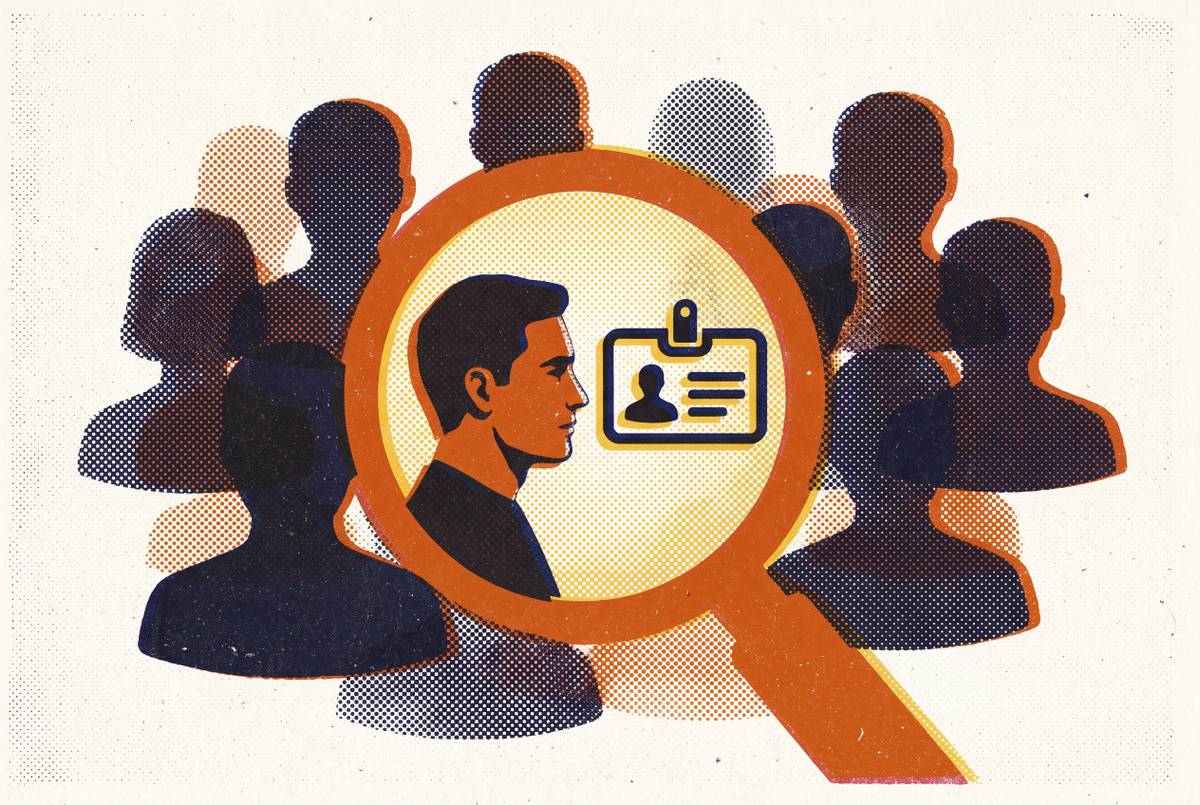
Person-level identification checks browser signals for a match in an identity graph, a database that links digital signals to real people. The match returns an individual rather than merely the company associated with a network. Graph quality shapes the reliability of that result. A named visitor is useful only if the evidence supports attaching the session to that person.
Deterministic matching uses verified first-party data to confirm who someone is, while probabilistic matching uses statistical patterns to estimate who they are. The latter can return the wrong person from the right company. That difference propagates into every later field. An accurate phone number for an incorrectly identified person does not repair the original match, and a detailed click path attributed to that person remains misleading.
Geography and network context also constrain coverage. In the workflow described here, person-level identification works for US traffic, while GDPR limits EU output to company-level identification, with no named individuals. A VP browsing from a residential connection appears through a residential ISP, weakening the company signal and increasing the importance of the person-level identity graph.
How the ad click ID connects a named visitor to the campaign that brought them
The ad click ID is the link between the visit and its paid source. Google Ads Help describes GCLID as a URL parameter passed with ad clicks, and Meta’s developer documentation identifies FBCLID as the corresponding click parameter for its advertising traffic. LinkedIn traffic has its own click parameter. The identification layer must read the incoming parameter and store it with the person record.
That capture requires deliberate instrumentation rather than an assumption that attribution arrives with identity. The click ID provides the technical thread back to campaign context, including campaign, ad set, or keyword where applicable. Without capture, the team may know who visited but lack the distinction between branded search, a competitor keyword, a sponsored post, and organic traffic. Identity alone cannot supply that missing context.
With the connection in place, a LinkedIn ad click followed by pricing and two case studies becomes a coherent paid journey. Its usefulness extends beyond the first conversation. Writing ad source onto the native contact or deal record in HubSpot or Salesforce lets attribution move through the pipeline.
How the click path field is built from session-level behavioral events
The click path is a sequenced event log. Page views establish where the visitor went and in what order, while scroll depth helps distinguish reading from a quick departure. Video plays and clicks on specific elements add engagement signals. Form interactions distinguish starting a form from submitting it, and exit intent triggers add context about departure.
Order changes the interpretation of those events. Pricing before case studies can suggest that someone is weighing the offer, while case studies followed by pricing can suggest that they are moving from research toward a decision. These are tentative signals of buying intent. Their value comes from giving the rep a more grounded interpretation than job title alone provides.
Return visits extend that interpretation over time. In a hypothetical sequence, the first visit includes a blog post, the second includes pricing and two case studies, and the third includes pricing again plus the integrations page. Visit count and return patterns connect those sessions. The result gives the rep a reason to discuss what the visitor needs from an integration instead of sending a generic message about a site visit.
Why a phone number requires a separate enrichment step and how that step works
Identification establishes who the visitor is, while enrichment supplies additional information needed to reach that person. A verified direct-dial number comes from this separate enrichment layer. The layer can also append additional email addresses and firmographic detail. This separation explains why a named visitor does not automatically arrive with a usable phone number.
Leadpipe’s data enrichment guide describes a waterfall approach in which the system queries another provider when the first cannot return a number, then proceeds to a third if needed. Coverage improves without manual research by the rep. Deterministic person-level identification is the prerequisite for phone enrichment worth acting on, because a probabilistic mismatch can attach valid contact data to the wrong visitor.
Freshness is a further constraint on usefulness. A number that is two years stale wastes SDR time and can weaken confidence in the entire record. Verification dates therefore deserve attention alongside coverage size. Do-not-call filtering should occur before delivery to the rep, and the catalog’s separate status fields should not be mistaken for evidence that filtering has already happened.
What inflated match rates conceal and how to read a vendor's real coverage
A headline identification rate can combine two different outputs, namely company matches and person matches. Company-level reverse IP lookup covers a significantly larger share of B2B traffic, while actionable person-level records cover a materially smaller share. Blending them obscures what sales actually receives. A company name does not provide the named contact and phone number required by this workflow.
The evaluation questions should expose that distinction. Does the rate describe person-level identification or a blended result? Is its denominator limited to human sessions? What is the geographic breakdown? These questions establish whether the reported coverage resembles the team’s own audience, particularly where EU traffic cannot produce named individuals in the described workflow.
Counting bots as unidentified humans enlarges that denominator, while treating their activity as buyer engagement can inflate apparent opportunity. A comparison should keep those effects separate, account for sessions that are not people who can be identified, and allow for paid traffic that stays unidentified.
How AI agents visiting the site contaminate the identification pool if left unfiltered
Some AI crawlers and agents run JavaScript, set cookies, and fire page-view events. Their sessions can also produce multiple page views, scroll signals, and time-on-page measurements that resemble human engagement. They are not necessarily buying signals. If those sessions enter the identification pipeline without classification, the behavioral record can describe automation.
This contamination has operational costs as well as reporting consequences. Automated sessions can consume match quota, may trigger alerts on non-human visitors, and inflate session counts used to interpret paid performance. The identification layer should therefore separate AI agent traffic from human sessions before enrichment runs. If filtering happens afterward, the same traffic has already passed through the match and enrichment process.
Training crawlers, retrieval agents, and AI search tools show which content automated systems use. That information can inform content strategy by showing how material is being indexed and surfaced through AI-powered search. It belongs in a distinct view, however, rather than in a sales queue that treats engagement as evidence of a human buyer.
How the full record reaches the tools a sales or demand-gen team already uses
Slack or Microsoft Teams can receive a real-time alert containing the name, title, company, pages viewed, ad source, and phone number. The channel does not need to change. What changes is the payload, which supplies the context and contact data previously gathered elsewhere.
CRM auto-creation offers a different destination for the same record. A contact can land in HubSpot, Salesforce, or Attio with enriched fields populated and the event journey attached, while ad source is written to the native object. REST API access supports on-demand queries of identified visitors. Bulk CSV export supports moving batches into a team’s own data warehouse without making manual entry part of the rep’s workflow.
Identified companies and individuals can feed Google, Meta, and LinkedIn audience lists, connecting the visit to subsequent retargeting as well as attribution. Agencies have an additional separation requirement. Partner accounts with domain-scoped API keys keep each client’s visitor data separate, so the workflow can run across accounts without mixing their records.
What a rep does differently with the full record compared to the Slack drop
With a Slack drop alone, the rep moves from the alert to LinkedIn and then to a separate contact search. Pages visited give the rep clues, but the campaign context is still unclear and the opening message can become generic. The full record changes the basis of that conversation. Research is no longer the necessary first response to every notification.
Consider a VP of Demand Generation who arrives from a LinkedIn ad promoting a competitor-comparison piece, reads it, and then visits pricing and integrations. Two days later, the visitor returns to pricing. With a direct dial attached, the rep has both a contact route and a concrete business context. The outreach can address integration evaluation without reciting the person’s browsing history. Meanwhile, the ICP flag and CRM status help prioritize suitable visitors who are not already in an active deal.
For demand-gen, ad source connects that activity to the spend that prompted it. If visitors from a specific LinkedIn campaign who reach pricing match the profile of closed-won customers, the campaign has a stronger basis for additional budget. The five categories now serve distinct roles, with contact data enabling outreach, behavior informing relevance, CRM status and ICP fit guiding attention, and ad source supporting attribution. The record fills the top of the funnel with someone a rep can call and informs the investment decisions that fill it again.